Remembrance Week
"We shall never surrender": remembering Edmonton's Millar brothers
William Anderson Millar and Catherine Gracey Millar of Edmonton sent three of their four sons to the Second World War. Two never came home — one through four escapes and a concentration camp, the other into the sea off the coast of France.
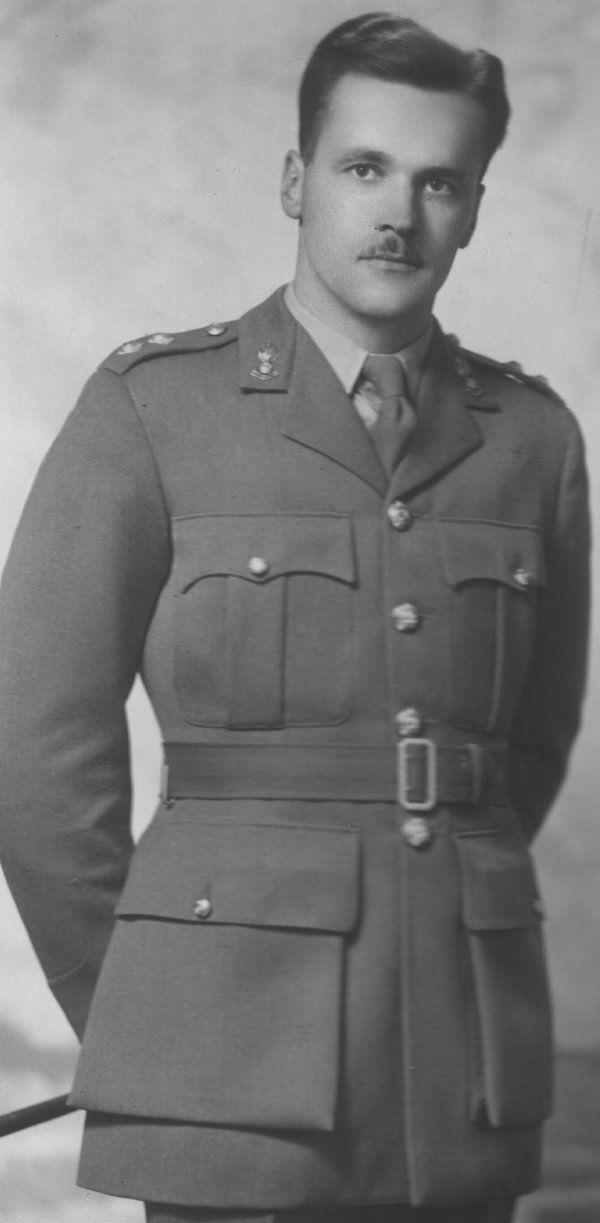
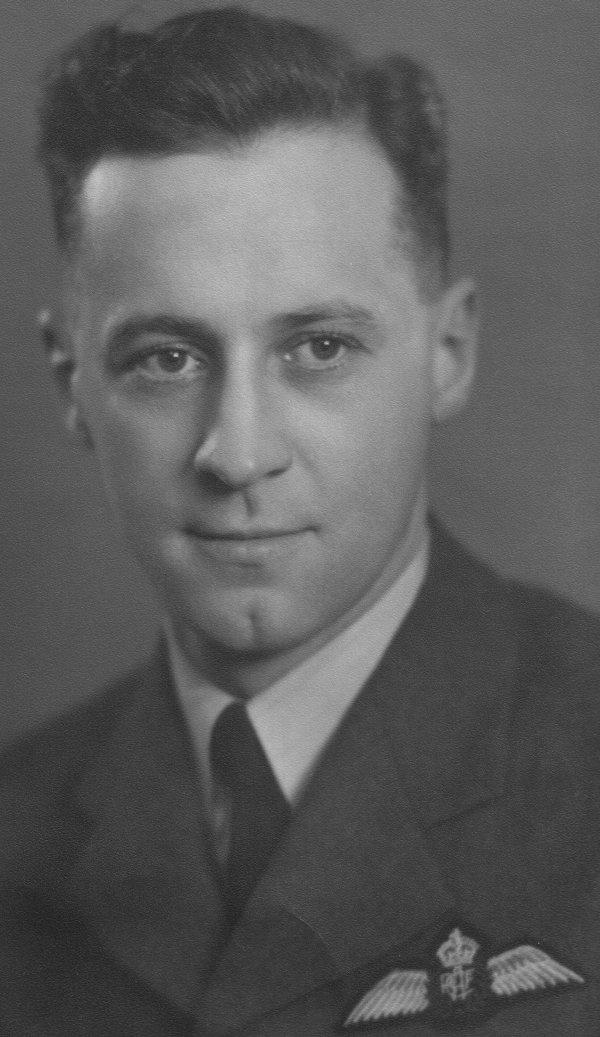
The Second World War brought devastation, fear and uncertainty on a scale the world had never witnessed. For the men and women who answered the call to serve, it demanded sacrifices far beyond anything they could have imagined in civilian life, leading them to perform exceptional acts of courage and selflessness. Among those who rose to meet that extraordinary challenge were two brothers from Edmonton, Lieutenant William Anderson Millar and Flying Officer John Whitla Millar.
They were the sons of William Anderson Millar and Catherine Gracey Millar, and grew up in a loving household in Edmonton. There were four Millar sons. Three of them went to war: William, born in 1913; John, born two years later, on 4 January 1915; and their younger brother, Lieutenant James Lea Millar of the Royal Canadian Artillery. Together the brothers had shared countless cherished memories and the simple joys of childhood. Both William and John distinguished themselves as bright students, and each felt a strong desire to serve in uniform.
Following high school, William joined Edmonton's local militia and later became a member of the Canadian Officer Training Corps at the University of Alberta, where he graduated in 1938 with a degree in mining engineering. His expertise in explosives, tunnelling and demolition would soon become invaluable — and, in a way nobody could have intended, would keep saving his life.
As war swept across the globe, William enlisted in the Canadian Army in January 1941 and joined the Royal Canadian Engineers, serving with No. 7 Field Company. He sailed for Britain later that year. On 19 August 1942, he landed at Dieppe with 55 men as part of the Allied assault on the German-occupied French port, tasked with clearing beach obstacles and carrying out demolitions. As German guns poured fire onto the beach, William was seen leading his men, tending to the wounded and directing their defence. He was Mentioned in Dispatches for his conduct on Red Beach that morning.
Captured during the assault, he soon began a remarkable battle of his own. Escaping from a train carrying prisoners to Germany, he was recaptured and imprisoned, only to escape again. At Eichstätt in Germany, he joined other officers in constructing an escape tunnel and once more broke free. Captured in Austria, he was returned to captivity and eventually branded a "persistent escaper", earning a transfer to Colditz Castle, the notorious German prison for Allied officers.
But even Colditz Castle could not contain this Canadian. On 28 January 1944, William escaped again, only to be recaptured two weeks later. Eventually transported to Mauthausen concentration camp, he is believed to have been executed on 15 July 1944 and cremated there. Four successful escapes in seventeen months testified to his extraordinary determination and bravery. He has no grave. He is commemorated on the Brookwood Memorial in Surrey, on the University of Alberta War Memorial, and in the Colditz Society's Book of Remembrance — and far from all of them, Millar Lake in the Northwest Territories carries his name.
While William was enduring captivity in Europe, John had taken to the skies. He graduated from the University of Alberta with a degree in geology in the class of 1941, having also played quarterback for the university rugby team, and enlisted in Edmonton that April. He won his wings at Dauphin, Manitoba, and was posted to Britain, joining No. 44 (Rhodesia) Squadron. He became qualified to command the powerful Lancaster bomber and flew into the darkness on dangerous missions over enemy territory, carrying out raids on Duisburg, Essen, Düsseldorf, Hamburg and Cologne.
Then, during the night of 7–8 February 1943, John and his crew set out for Lorient, in north-western France, to attack a German submarine base. Tragically, their Lancaster never returned. The aircraft disappeared off the coast of France, and the entire crew was declared missing. John was 28. A body recovered off the coast of Denmark was later identified as Flying Officer John Millar, but investigation continued for years, and in July 1951 the Royal Canadian Air Force and the Royal Air Force agreed the remains in that grave were not his. John's final resting place remains unknown. He is commemorated on the Runnymede Memorial in Surrey, among more than twenty thousand airmen of the Commonwealth with no known grave.
Something in the family's correspondence captures the cruelty of waiting better than any account of a raid. Long after John was reported missing, a telegram signed "Jack" reached his father. John was known as Jack. So was one of his brothers. For a time his parents allowed themselves to hope that it meant their airman was alive and a prisoner of war. It did not.
For their parents, the cost of war was unbearable, leaving them without a funeral to attend or a resting place to visit — only tears, emptiness and the pain of never seeing their sons again. James came home. William and John did not. William and Catherine carried that loss for the rest of their lives. William died in 1951, followed by Catherine in 1959, and both were laid to rest at Edmonton Municipal Cemetery.
It is our solemn duty to remember Lieutenant William Anderson Millar and Flying Officer John Whitla Millar, and to ensure their sacrifice is never forgotten. By keeping their stories alive, we lay flowers where no graves exist, honouring two brothers who gave their lives for freedom. Edmonton must never forget two of its bravest and most selfless sons, whose courage and devotion remain forever woven into the history of the city they once called home.
Written for Alberta Daily by John Dekhane.